Blogs
Caffeine Timing: The Hidden Factor Affecting Your Sleep and Performance
Mar 4, 2026
Most people focus on how much caffeine they drink.
But the real factor that matters is when you drink it.
Caffeine is one of the most effective performance boosters for focus, workouts, and productivity. But poor timing can quietly affect sleep quality, recovery, and long term tolerance.
Understanding how caffeine works in your body can help you use it smarter.
How Caffeine Works in the Body
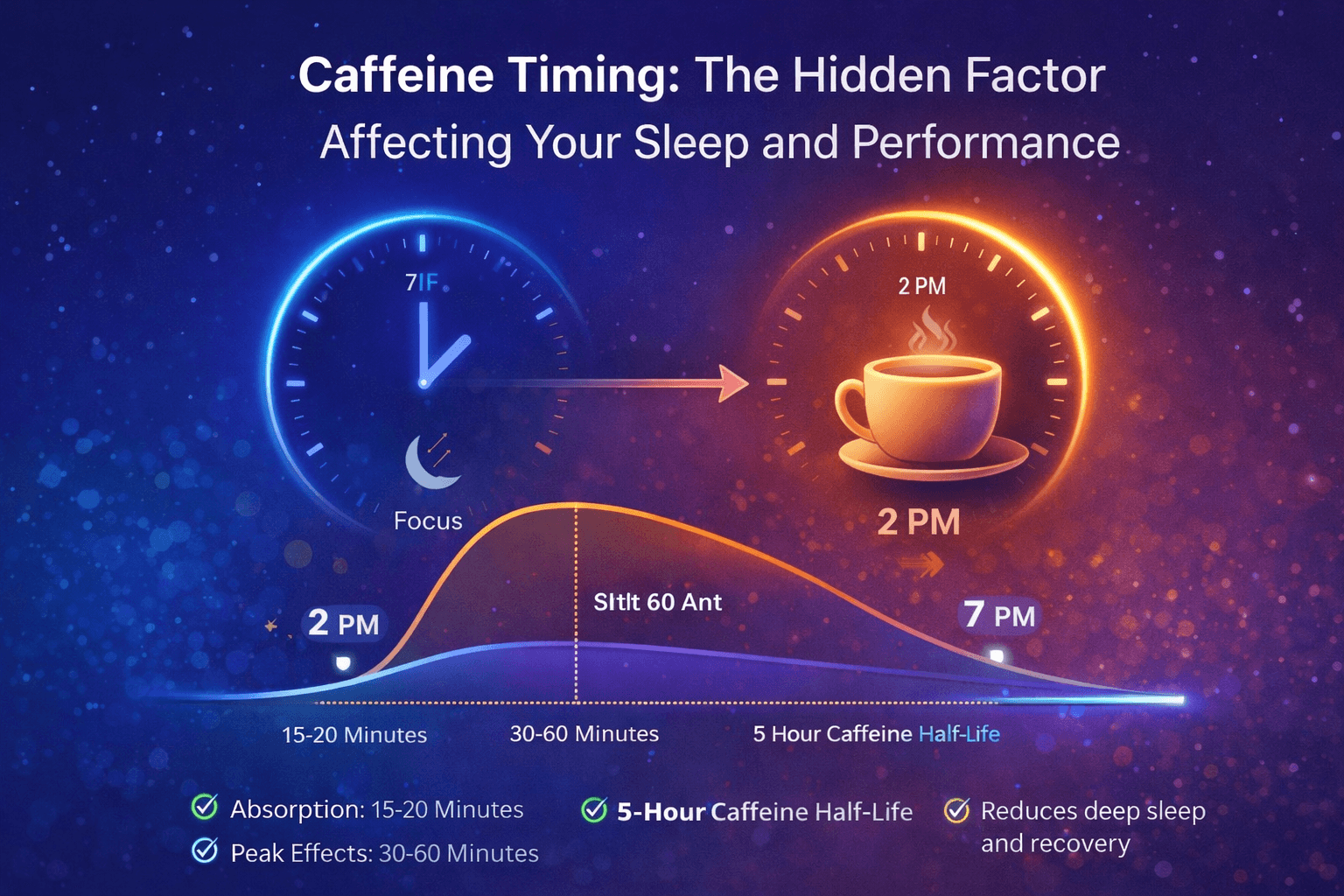
Caffeine does not work instantly. It follows a clear timeline in the body.
• Absorption begins within 15 to 20 minutes
• Peak effects happen around 30 to 60 minutes
• The average caffeine half life is about 5 hours
This means if you drink coffee at 2PM, half of that caffeine is still active in your system around 7PM. Even if you feel fine, your nervous system may still be stimulated.
This can reduce deep sleep quality and recovery later in the night.
Optimal Caffeine Dose for Focus and Performance
Research shows caffeine works best within moderate ranges.
Typical effective doses include:
• 40 to 100 mg for alertness
• 100 to 200 mg for productivity and focus
• 3 to 4 mg per kg body weight for workout performance
More caffeine does not always mean better results. High doses often lead to jitters, anxiety, and faster tolerance buildup.
How to Use Caffeine Smarter
A few simple adjustments can improve the benefits of caffeine.
Delay your first coffee
Wait about 60 to 90 minutes after waking up before drinking caffeine.
Avoid caffeine late in the day
Try to stop caffeine intake 6 to 8 hours before sleep.
Time caffeine for performance
Consume caffeine 30 to 45 minutes before workouts or focused work sessions.
Key Takeaway
Caffeine is powerful when used correctly.
The goal is not drinking more caffeine.
The goal is timing it better.
Better caffeine timing can improve focus, performance, and sleep quality without increasing your daily intake.
