Blogs
Pro Tips
How to Track Workout Progress Over 12 Weeks (Step-by-Step Guide)
Mar 27, 2026
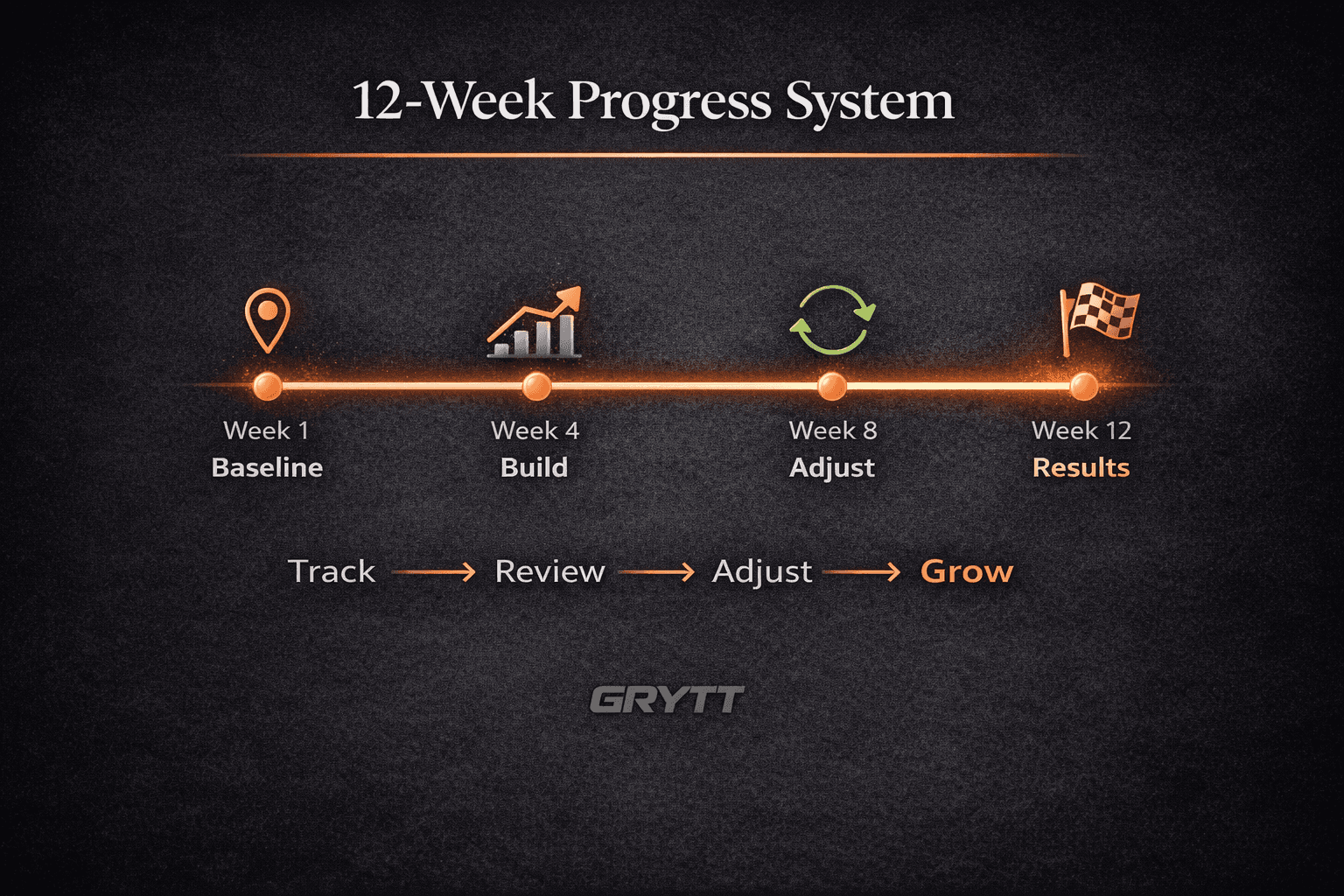
Tracking workout progress over a short period can feel motivating, but real results are built over time. A 12-week training window is one of the most effective ways to measure meaningful progress. It allows enough time to apply progressive overload, adjust your routine, and see visible improvements. Without structured tracking, however, these changes can go unnoticed.
Step 1: Establish Your Baseline
Start by recording your current performance. Log your main exercises, sets, reps, and weights for each workout. This baseline acts as your reference point for the entire 12-week period. Without it, there’s no way to measure improvement accurately.
Step 2: Track Every Workout Consistently
Consistency is the most important factor. Every session should be logged, regardless of intensity. Even lighter workouts contribute to your overall progress. Tracking consistently ensures that your data reflects real performance trends, not selective snapshots.
Step 3: Focus on Small Progressions
Over 12 weeks, progress doesn’t come from massive jumps it comes from small, consistent improvements. Adding one rep, slightly increasing weight, or improving control all count as progress. These micro-progressions compound over time and drive long-term results.
Step 4: Review Your Data Weekly
Tracking alone isn’t enough. Reviewing your logs helps you understand whether your training is moving forward. At the end of each week, look at your performance trends. Are your lifts improving? Is your volume increasing? These insights help guide your next sessions.
Step 5: Adjust Based on Performance
If progress slows or stalls, adjustments are necessary. This could mean increasing volume, modifying intensity, or improving recovery. Your logged data provides the information needed to make these decisions strategically instead of guessing.
Step 6: Monitor Fatigue and Recovery
Not all progress is linear. Some weeks may feel harder than others. Tracking your performance helps you identify fatigue patterns. If your numbers drop consistently, it may be time for a deload or recovery-focused adjustment.
Step 7: Evaluate Your 12-Week Progress
At the end of the cycle, compare your results to your baseline. Look at improvements in strength, volume, and consistency. Even small increases across multiple exercises indicate meaningful progress. This evaluation helps refine your next training cycle.
A structured workout logging app simplifies this entire process. Grytt allows you to track workouts consistently and review performance trends without added complexity. When your data is organized clearly, long-term tracking becomes easier to maintain.
Tracking progress over 12 weeks isn’t about perfection it’s about consistency. When workouts are logged and reviewed regularly, progress becomes visible, adjustments become smarter, and results become more predictable.
